SPACES & PROPORTIONS
A good plan starts with your day.
Before comparing dimensions, imagine arriving, cooking, working and resting in the space.
01 / ARRIVAL
Follow your own footsteps.
Where do bags, coats and shoes go? Can you move easily from the entrance to the kitchen? A clear arrival sequence makes the whole home work better.
02 / CONNECTION
Open, when it matters.
Think about where you want to gather and where you need privacy. A useful plan balances connection with the ability to close a door.
03 / FLEXIBILITY
Look beyond today.
Consider changing routines and access needs. Ask for measured drawings, clearances and specifications before making a decision.
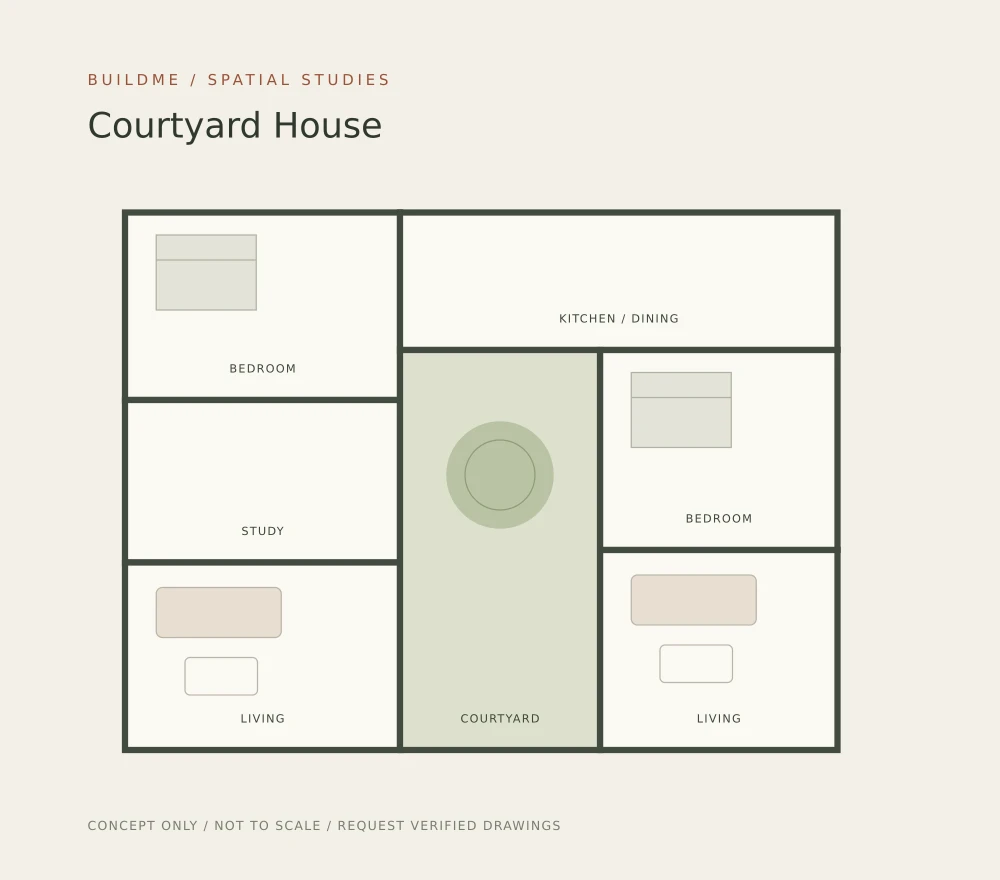
Courtyard flow
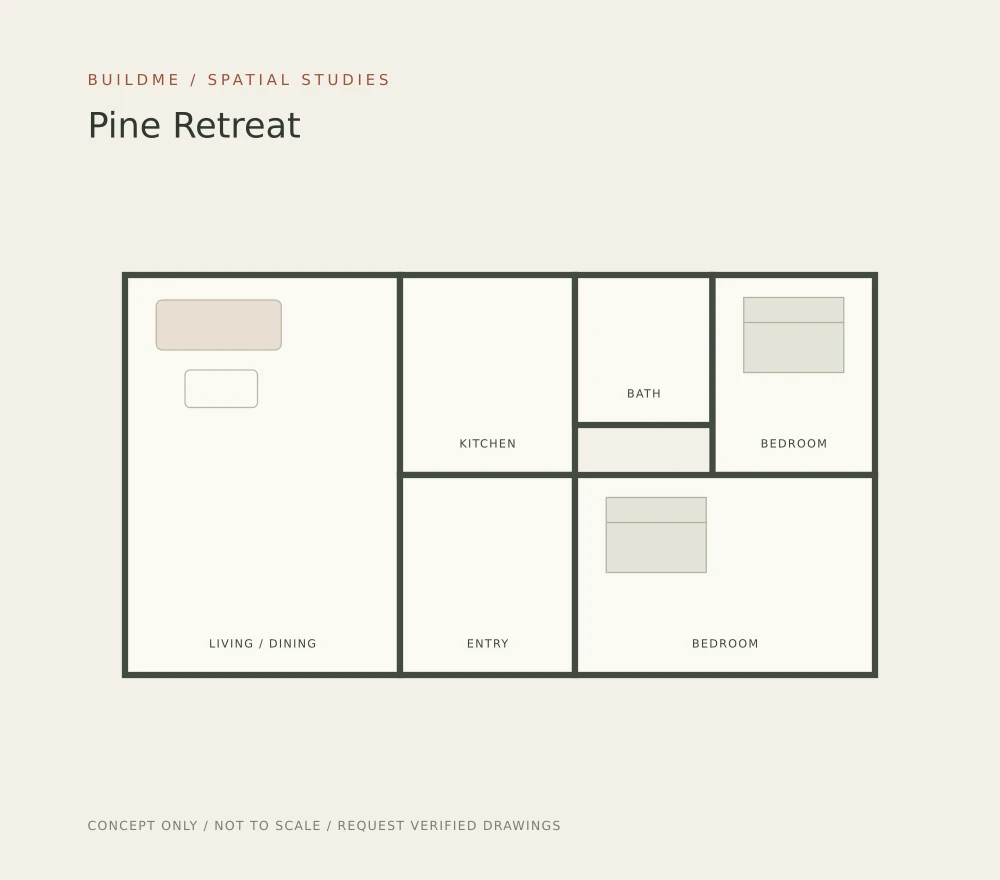
Woodland outlook
Let’s talk about your priorities.
FROM PAPER TO EVERYDAY LIFE
Read the plan with your own footsteps.
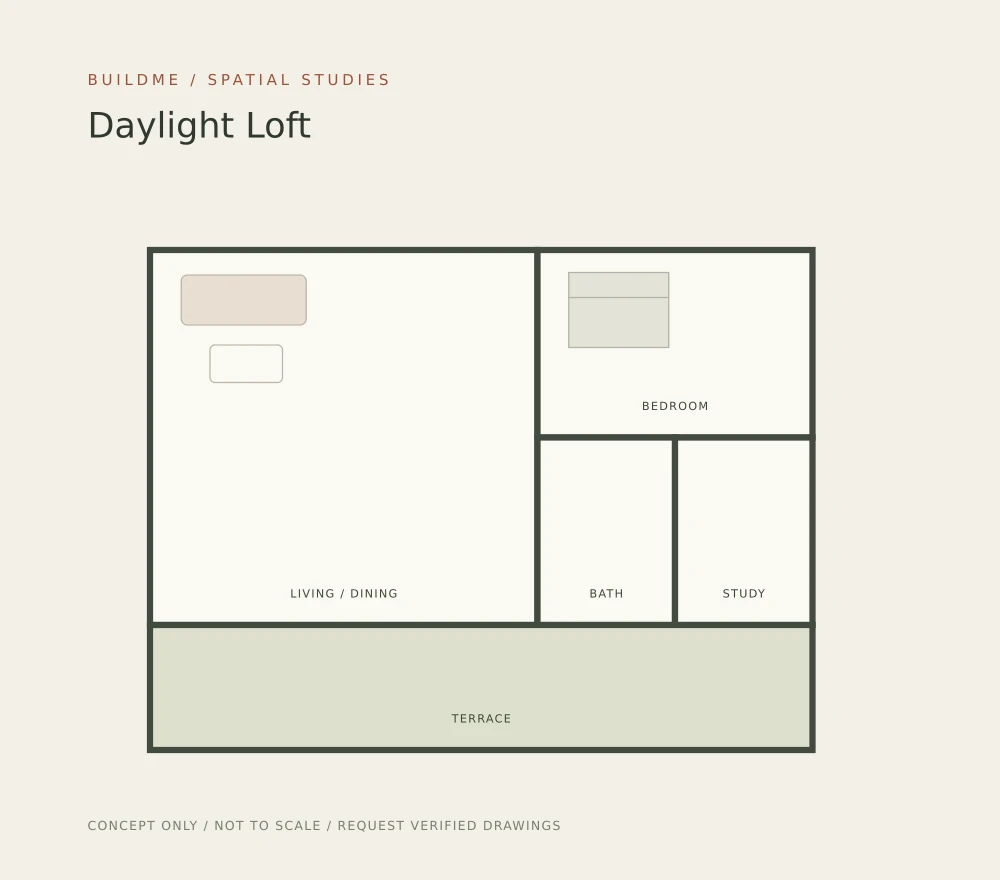
Picture arriving with shopping, setting a table for friends or finding a quiet place for a call. Follow those routes through the drawing. A useful plan is a map of everyday relationships, not only a collection of room names.
Make a short list of the moments that matter most to you. Bring it to your conversation with the operator, and ask for measured drawings, clearances and the current specification.