Think about touch
Start with the surfaces you experience every day: a handle, the edge of a table, the floor beneath your feet. Look at samples together in natural light, and ask how the finish changes with use.
Give contrast a purpose
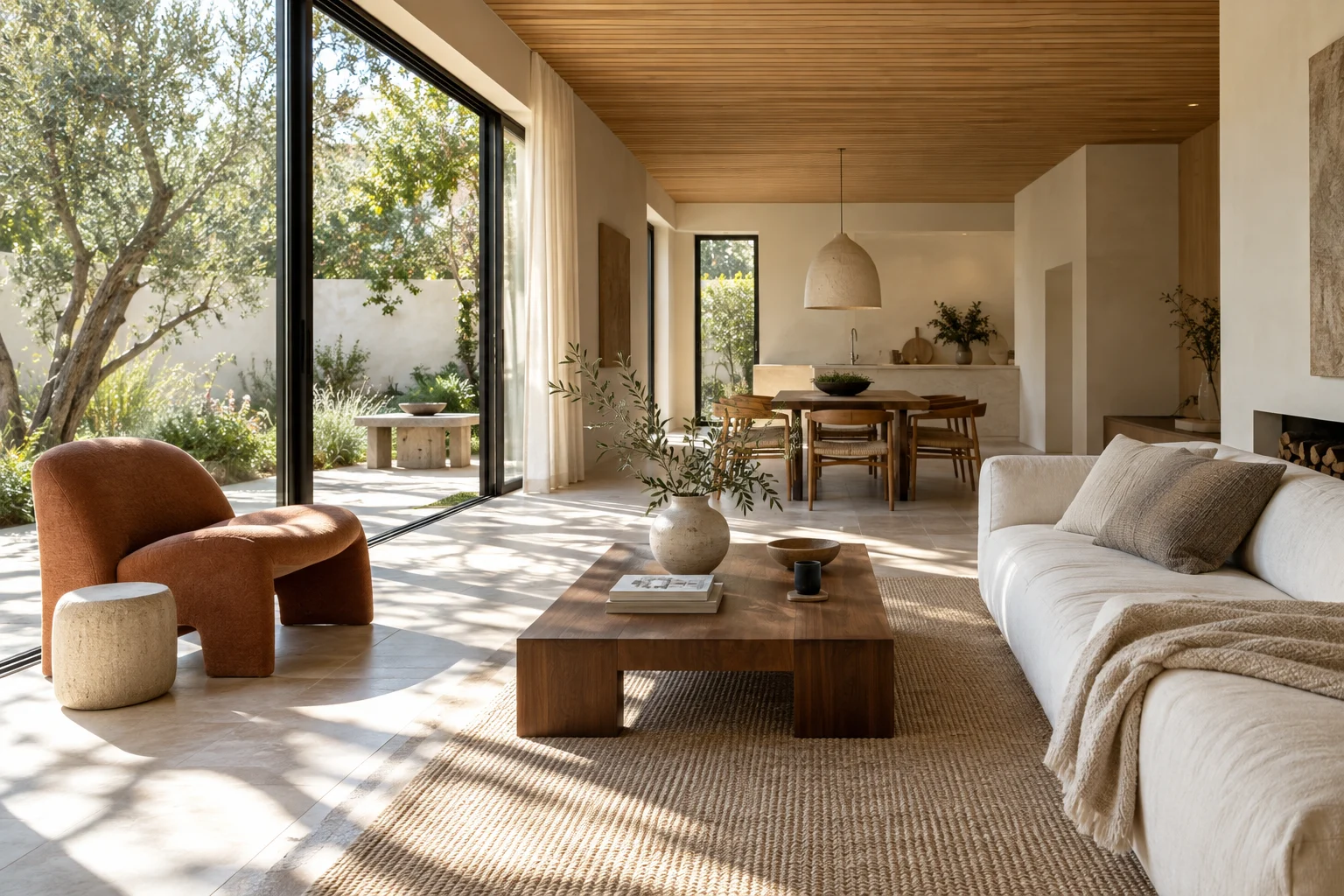
A small amount of darker timber or warm terracotta can ground a pale room. Let a few materials repeat rather than introducing something new in every corner. Repetition helps spaces feel connected.
Leave the story open
A home becomes personal over time. Books, photographs and useful objects deserve a place in the composition. A considered palette gives them room without making the interior feel unfinished.
Build a small material conversation
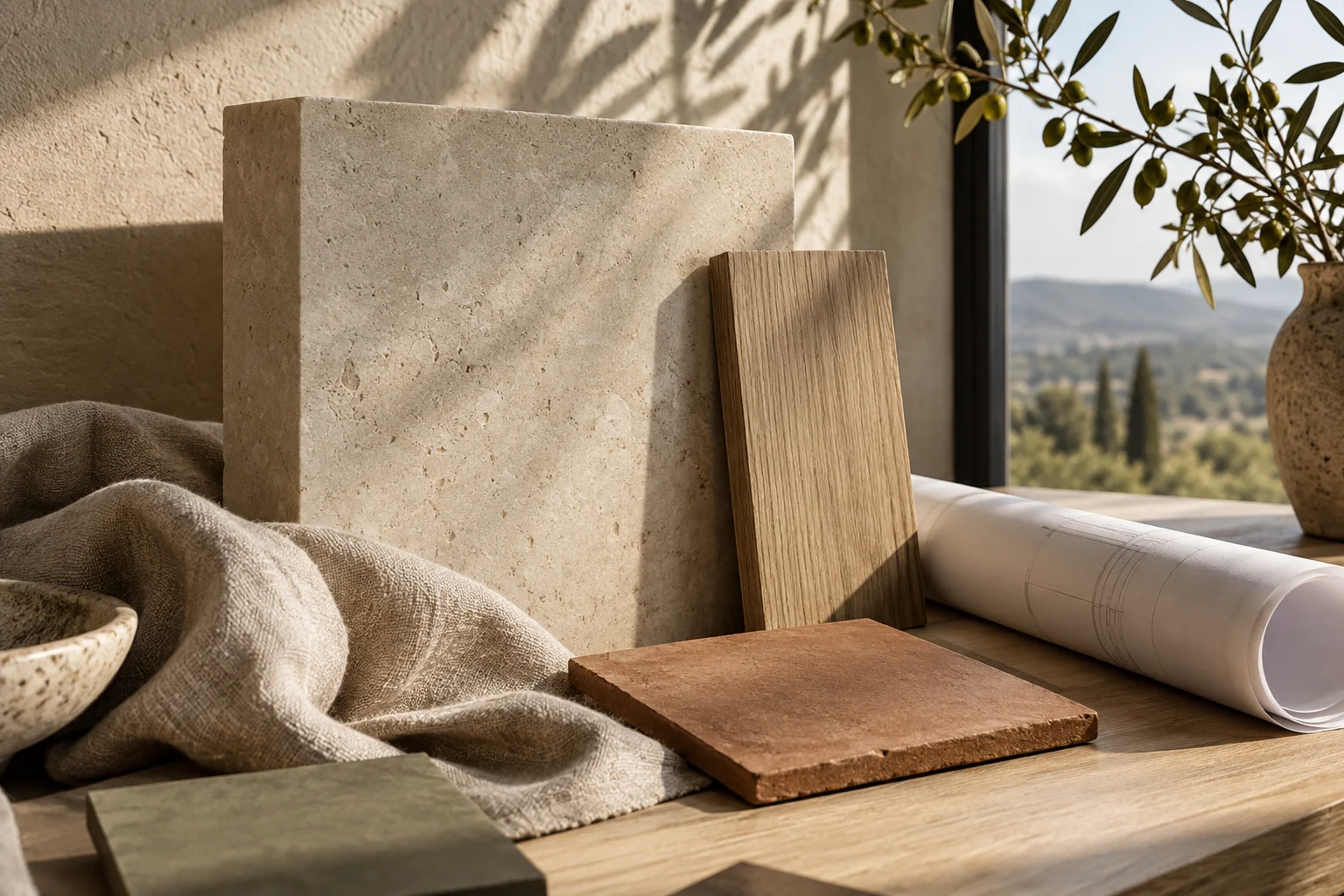
Place a few samples together: one timber, one stone, a fabric and a warmer accent. Look at them in the daylight and then under the lighting you expect to use in the evening. Notice which combinations feel calm and which compete for attention. The Buildme material desk pairs oak and limestone with linen and terracotta. Each has its own texture, so the palette can remain restrained without becoming flat. A photograph is only a starting point; physical samples help reveal grain, finish and the way surfaces feel beside one another.
Design for the life of the room
A material choice should make sense on an ordinary busy day as well as in a carefully arranged image. Ask how a finish is cleaned, repaired and maintained. Think about the surfaces that will be touched most often, and where a softer material will be appreciated. Then leave space for the objects that arrive with living: a book, a favourite cup, a photograph, a useful basket. A room becomes richer through use. The goal is a foundation that welcomes those things, rather than a composition that only works when nothing moves.
Until the next discovery.
Conversation