Start with a morning
Notice where the first light reaches the room. A small place to sit near a window can make the beginning of a day feel different. Think about the routines that matter to you, then see how the space supports them.
Watch the transitions
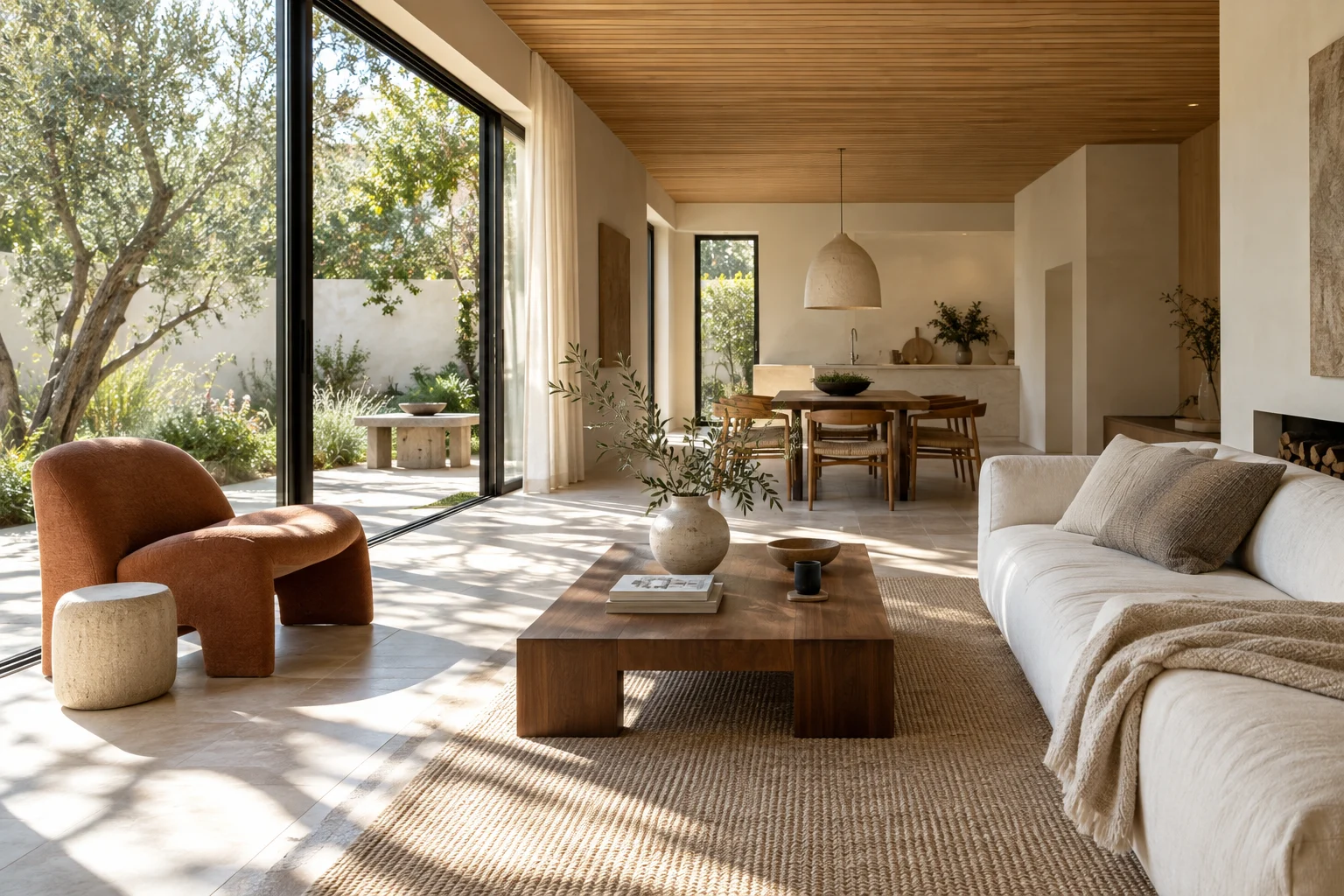
An image captures only a moment. Visit at different times where possible, and ask about orientation, shading and glazing. Look for somewhere bright to work as well as a quieter corner to rest.
Let the room respond
Curtains, planting and furniture placement can soften a bright space. Daylight is a useful starting point for arranging a room, rather than a detail to consider after everything else is in place.
Give each part of the day a place
Try a small exercise before arranging the furniture: write down where you would like to spend three ordinary moments. Perhaps it is breakfast beside the garden, a focused hour at the table and a quiet evening with a book. The best position for each may be different. A flexible room allows those moments to coexist instead of asking one chair or one light source to do everything. In a smaller home, a moveable lamp and a comfortable seat can be enough to change the atmosphere. Start with what you actually do, and let the room respond.
Keep a simple light diary
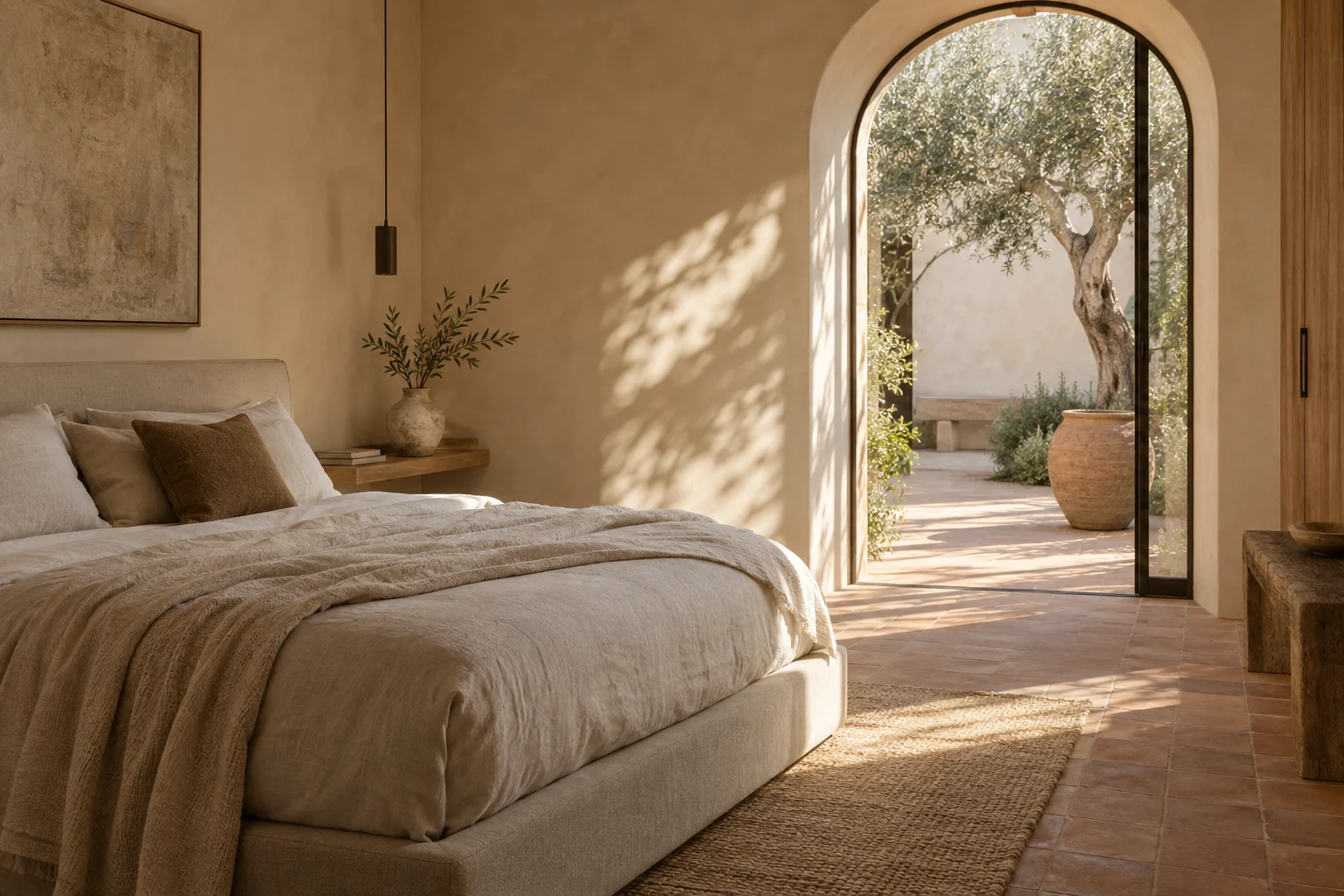
If you can return to a space, make a short note of the light in the morning and later in the day. Notice glare on a work surface, a shadow that creates a restful corner, or a view that feels particularly inviting. You are collecting observations, not trying to make every room equally bright. Bring those notes to a conversation about shading, curtains and glazing. Ask which parts of an image represent the actual proposed space and which are an atmosphere study. A useful decision grows from understanding the room over time.
Until the next discovery.
Conversation